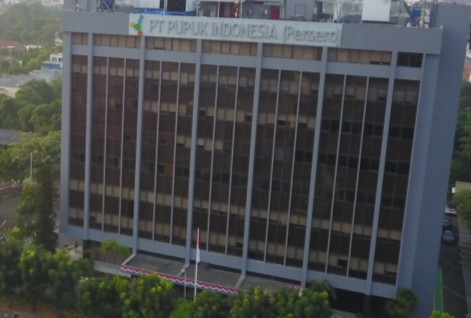
Making History, Pupuk Indonesia Builds Indonesia’s First Nitrate-Based NPK Fertilizer Plant at Pupuk Kujang Cikampek
-
 Posted by User01
- Share


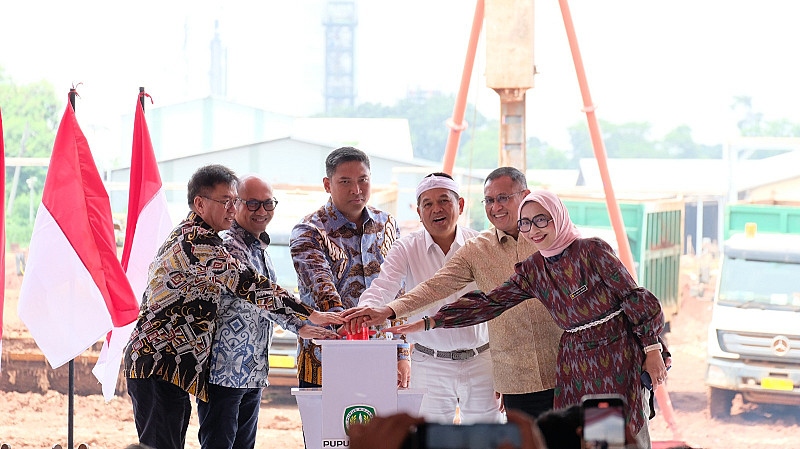
Cikampek, 23 December 2025 – PT Pupuk Indonesia (Persero), through its subsidiaries PT Pupuk Kujang Cikampek (PKC) and PT Rekayasa Industri (Rekind), has officially commenced construction of Indonesia’s first nitrate-based NPK fertilizer plant using ammonium nitrate. The groundbreaking ceremony, held at the Kujang Cikampek industrial area in West Java, marks an important milestone in strengthening a more modern, efficient, and high value-added national fertilizer supply to support food self-sufficiency.
President Director of Pupuk Indonesia, Rahmad Pribadi, stated that the development of the NPK Nitrate plant is a strategic step in advancing downstream fertilizer industry development, in line with the Asta Cita agenda of President Prabowo Subianto’s administration. The project also reinforces the foundation of national fertilizer supply to become more self-reliant, efficient, and competitive.
“The groundbreaking of this NPK Nitrate plant marks a historic milestone, as what we are building will become a new foundation in the development of the fertilizer industry and agriculture as a whole. We dedicate this project as a meaningful year-end milestone for farmers and as a continuous effort toward achieving national food self-sufficiency,” Rahmad said.
Once fully operational in the third quarter of 2027—specifically on 12 August 2027—the plant will have a production capacity of 100,000 metric tons per year, meeting approximately 25 percent of Indonesia’s NPK Nitrate demand, which is currently still dependent on imports. Built on a five-hectare site, the facility is expected to save national foreign exchange through import substitution amounting to IDR 700 billion to IDR 1 trillion per year.
The construction of the NPK Nitrate plant strengthens the supply chain and promotes downstream integration within the Pupuk Indonesia Group by adding value to ammonium nitrate, which is produced domestically by Pupuk Kujang’s subsidiary, PT Multi Nitrotama Kimia, as a key raw material for NPK Nitrate fertilizer. Through this integration, the plant is expected to absorb up to 25,000 tons of ammonium nitrate annually, thereby enhancing supply independence, improving efficiency, and strengthening the competitiveness of Indonesia’s fertilizer industry.
“This plant is one of seven new plants that we have committed to build in support of the Government, following changes to fertilizer subsidy financing schemes through the issuance of Presidential Regulation (Perpres) Number 113 of 2025. We hope this development will help realize a more efficient, competitive fertilizer industry with stronger resilience against global volatility,” Rahmad added.
President Director of Pupuk Kujang, Budi Santoso Syarif, added that the NPK Nitrate plant aligns with the Government’s efforts to boost agricultural productivity, food security, and sustainable farming practices. Nitrate-based NPK formulations enable more efficient nutrient absorption and are more environmentally friendly, helping farmers increase crop yields and improve plant resilience against weather and pests.
“The construction of the NPK Nitrate plant represents a tangible contribution by the Pupuk Indonesia Group to enhancing agricultural productivity and safeguarding environmental sustainability for future generations. We ensure that the entire construction process adheres to the highest safety and quality standards, reflecting our responsibility to deliver an efficient, safe, and competitive industry. The technology embedded in Pupuk Kujang’s NPK Nitrate plant is the most advanced in the fertilizer industry and has been certified by Espindesa, a leading licensing company from Spain,” Budi said.
Nitrate-based nitrogen contained in this fertilizer plays a critical role during fruiting and flowering stages, thereby increasing crop yields. Based on a series of trials conducted by Pupuk Kujang since early 2024, agricultural productivity—particularly in the horticulture sector—has increased by up to 11.5 percent. The more stable characteristics of nitrate-based nitrogen also support sustainable agricultural practices.
Furthermore, the construction of the plant is expected to deliver direct benefits to both the national and regional economies through job creation, employing 130 workers during construction and 125 workers during operations. The project also has the potential to stimulate domestic economic growth through a 25 percent local content (TKDN) component valued at approximately IDR 140 billion. In addition, the project is being implemented in an accountable and optimal manner under the supervision of the Financial and Development Supervisory Agency (BPKP).
Indonesian Deputy Minister of Agriculture and President Commissioner of Pupuk Indonesia, Sudaryono, stated that the NPK Nitrate plant project aligns with President Prabowo Subianto’s vision of achieving food self-sufficiency. According to Sudaryono, the project is also in line with the objectives of Perpres Number 113 of 2025 in promoting sustainable efficiency within the fertilizer industry.
“Today’s groundbreaking proves that Pupuk Indonesia has a long-term vision. The idea for this NPK Nitrate plant was planned two years ago, through feasibility studies, market analysis, and thorough planning,” Sudaryono said.
Meanwhile, Managing Director of Business II at PT Danantara Asset Management (Persero), Setyanto Hantoro, expressed Danantara’s support for the development of the NPK Nitrate plant. He noted that the project demonstrates the readiness of the Pupuk Indonesia Group to revitalize the fertilizer industry in support of the Government’s food self-sufficiency agenda.
“This initiative will continue with new plants, expanded capacity, and greater efficiency compared to older facilities. As a result, productivity will increase while production costs can be reduced. This will make fertilizer prices more competitive and deliver significant benefits for the Indonesian people, especially farmers across the country,” Setyanto said.
Through the construction of the NPK Nitrate plant, Pupuk Indonesia reaffirms its readiness to implement the industrial revitalization agenda as mandated by Presidential Regulation Number 113 of 2025. These efforts are carried out through continuous improvements in efficiency and production capacity, including the revamping of PKT 2 Ammonia, the Pusri 3B Project, and the development of NPK Phonska VI at Petrokimia Gresik, the NPK PIM Plant, and the Fakfak Fertilizer Plant National Strategic Project (PSN), forming a foundation to maintain the affordability of fertilizers nationwide.